T2-low severe asthma clinical spectrum and impact: the Greek PHOLLOW cross-sectional study
Konstantinos Porpodis1, Nikolaos Zias2, Konstantinos Kostikas3, Argyris Tzouvelekis4, Michael Makris5, George N Konstantinou6, Eleftherios Zervas7, Stelios Loukides8, Paschalis Steiropoulos9, Konstantinos Katsoulis10, Anastasios Palamidas11, Aikaterini Syrigou12, Maria Gangadi13, Antonios Christopoulos14, Dimosthenis Papapetrou15, Fotios Psarros16, Konstantinos Gourgoulianis17, Eleni Tzortzaki18, Stylianos K Vittorakis19, Ioannis Paraskevopoulos20, Ilias Papanikolaou21, Georgios Krommidas22, Dimitrios Latsios23, Nikolaos Tzanakis24, Miltiadis Markatos25, Aggeliki Damianaki26, Argyrios Manikas27, Alexia Chatzipetrou28, Dimitrios Vourdas29, Ioanna Tsiouprou1, Christina Papista30, Marina Bartsakoulia30, Nikolas Mathioudakis30,Petros Galanakis30 and Petros Bakakos31
1Pulmonary Dpt., Aristotle University of Thessaloniki, G. Papanikolaou Hospital, Thessaloniki, Greece; 2Respiratory Dpt., Navy Hospital of Athens, Athens, Greece; 3Respiratory Medicine Dpt., School of Medicine, University of Ioannina, Ioannina, Greece; 4Dpt. of Respiratory Medicine, Medical School, University of Patras, Patras, Greece; 5Allergy Unit, 2nd Dpt. of Dermatology and Venereology, Medical School, National and Kapodistrian University of Athens, Attikon University General Hospital, Athens, Greece; 6Dpt. of Allergy and Clinical Immunology, 424 General Military Training Hospital, Thessaloniki, Greece; 77th Respiratory Dpt., Athens Chest Hospital Sotiria, Athens, Greece; 82nd Respiratory Dpt., Attikon University Hospital, National and Kapodistrian University of Athens Medical School, Athens, Greece; 9Dpt. of Respiratory Medicine, Medical School, Democritus University of Thrace, University General Hospital, Alexandroupolis, Greece; 10Pulmonary Dpt., 424 Army General Hospital, Thessaloniki, Greece; 11Athens Medical Center-Marousi Clinic, Athens, Greece; 12Allergy Dpt., Sotiria General Hospital, Athens, Greece; 1310th Dpt. of Pulmonary Medicine, Athens Chest Hospital Sotiria, Athens, Greece; 14Dpt. of Respiratory Medicine University Hospital Patras, Patra, Greece; 15Athens Medical Group, Paleo Faliro Clinic, Athens, Greece; 16Allergy Dpt., Athens Naval Hospital, Athens, Greece; 17Dpt. of Respiratory Medicine, University Hospital of Larissa, Faculty of Medicine, University of Thessaly, Larissa, Greece; 18Outpatient Respiratory Clinic, Heraklion, Greece; 19Private Practice, Chania, Greece; 20401 General Military Hospital Athens, Athens, Greece; 21Pulmonary Dpt., Corfu General Hospital, Corfu, Greece; 22Private Practice, Athens, Greece; 23Private Practice, Drama, Greece; 24Dpt. of Respiratory Medicine, University General Hospital of Heraklion, Laboratory of Molecular and Cellular Pneumonology, Medical School, University of Crete, Heraklion, Greece; 25Outpatient clinic for Pulmonary Diseases, Chania, Greece; 26Pulmonary and Sleep Medical Dpt., Chania General Hospital Agios Georgios, Chania, Greece; 27European Interbalkan Medical Center, Thessaloniki, Greece; 28Allergy Unit, 2nd Dpt. of Dermatology and Venereology, National and Kapodistrian University of Athens, University General Hospital Attikon, Athens, Greece; 29Dpt. of Allergy and Clinical Immunology, 251 General Airforce Hospital, Athens, Greece; 30AstraZeneca Medical Dpt., Respiratory and Immunology, Athens, Greece; 311st University Dpt. of Respiratory Medicine, National and Kapodistrian University of Athens, Athens, Greece
Corresponding author: Petros Bakakos, petros44@hotmail.com
Acknowledgements: The authors wish to thank Qualitis SA, a member of Optimapharm Group, for their medical writing and editorial support provided as part of the project work performed for AstraZeneca SA.
ABSTRACT
Background: Data on type 2 (T2)-low severe asthma (SA) frequency is scarce resulting in an undefined unmet therapeutic need in this patient population. Our objective was to assess the frequency and characterize the profile and burden of T2-low SA in Greece.
Methods: PHOLLOW was a cross-sectional study on adult SA patients. Based on a novel proposed classification system, patients were classified as T2-low if blood eosinophil count (BEC; cells/μL) was <150, fractional exhaled nitric oxide (FeNO)<25ppb and any allergy status or BEC<150/FeNO<50ppb/no allergy or BEC<300/FeNO<25ppb/no allergy. For patients receiving biologics and/or oral corticosteroids, only those with BEC<150/FeNO<25ppb/no allergy/no response to therapy were classified as T2-low. Secondary outcome measures were: Asthma Control Test (ACTTM), Mini-Asthma Quality of Life Questionnaire (Mini-AQLQ), hospital anxiety and depression scale (HADS), and Work Productivity and Activity Impairment:Respiratory Symptoms (WPAI:RS) questionnaire.
Results: From 22-Mar-2022 to 15-Mar-2023, 602 eligible SA patients were enrolled. The frequency of T2-low asthma was 20.1%. Of those, 71.1% had experienced ≥1 clinically significant exacerbations in the past year, 62.8% had ACT score <20 (uncontrolled asthma), and 22.3% were biologic-treated. Mini-AQLQ score was <6 (impairment) in 79.5% of patients, HADS-total score was ≥15 (clinically significant emotional distress) in 43.8%, while median percent activity impairment and work productivity loss were 30.0 for both domains. Clinical and patient-reported outcomes were worse among patients with ACT-defined uncontrolled asthma.
Conclusions: One-fifth of SA patients present with a T2-low endotype. These patients frequently have uncontrolled disease and experience impairments in their quality of life, emotions and work ability.
Key words: clinically significant exacerbations, quality of life, real-world, symptom control, treatment patterns
Funding information: This work was supported and funded by AstraZeneca S.A..
Abstract word count: 250
Main body word count: 3500
INTRODUCTION
Asthma affects more than 260 million people worldwide,1 with a lifetime self-reported prevalence of 9.1% in Greece.2 About 4-10% of asthmatics have severe asthma (SA), defined by the American Thoracic Society/European Respiratory Society as “asthma requiring treatment with high-dose inhaled corticosteroids (ICS) plus a second controller and/or systemic corticosteroids to prevent it from becoming ‘uncontrolled’ or that remains ‘uncontrolled’ despite this therapy.”3-7 Patients with SA suffer from impaired health-related quality of life (HRQoL) and exacerbations that may require emergency department (ED) visits and/or hospitalization, contributing to increased healthcare resource utilization (HCRU).8,9
Two major endotypes of SA have been widely recognised, namely type-2 (T2)-high and T2-low, depending on type of airway inflammation.10 T2 inflammation is characterized by eosinophilic airway infiltrates and overexpression of T2 cytokines, including interleukins (IL)-4/5/13. T2-high asthma can be allergic or non-allergic and is defined by high levels of blood eosinophil count (BEC) and fractional exhaled nitric oxide (FeNO) or sensitization to common aeroallergens independently of BEC/FENO. Conversely, T2-low asthma is predominantly a neutrophilic or pauci-granulocytic phenotype, characterized by the absence of T2-high biomarkers, and lack of response to corticosteroids.10 Nevertheless, there are no T2-low universally validated biomarkers in clinical practice,10,11 leading to a wide variation in the reported frequency of T2-low asthma: 9%-50%.11-25
Following the approval of the first biologic agent in SA management nearly 20 years ago, [omalizumab targeting immunoglobulin E (IgE)], multiple biologics targeting T2 cytokine signaling have been introduced.26 However, patients with T2-high asthma are more likely to respond to these than patients with low T2-inflammation markers.27-31 Efforts to identify targeted therapeutic approaches for T2-low asthma are continuing.11,32 This recognized unmet need led to the recent approval of tezepelumab, an anti-alarmin antibody, which is a first-in-class drug and the only biologic approved in the European Union as add-on maintenance treatment for SA without phenotype/biomarker limitations.33,34 These advances together with optimized endotype-definition tools can aid in delivering tailored therapeutic approaches and improve outcomes, particularly for the T2-low SA subpopulation.
In the absence of information on T2-low SA in Greece and in light of the rapidly evolving SA treatment landscape, the PHOLLOW study aimed to assess the T2-low frequency and T2-high endotypes among SA patients managed in routine care settings using a new well-defined endotype classification system, taking into consideration patients on biologic and/or maintenance oral corticosteroid (mOCS) treatment.35 In addition, the study sought to describe the profile, treatments and burden of T2-low SA patients in order to better inform future healthcare policy decisions.
METHODS
Study design
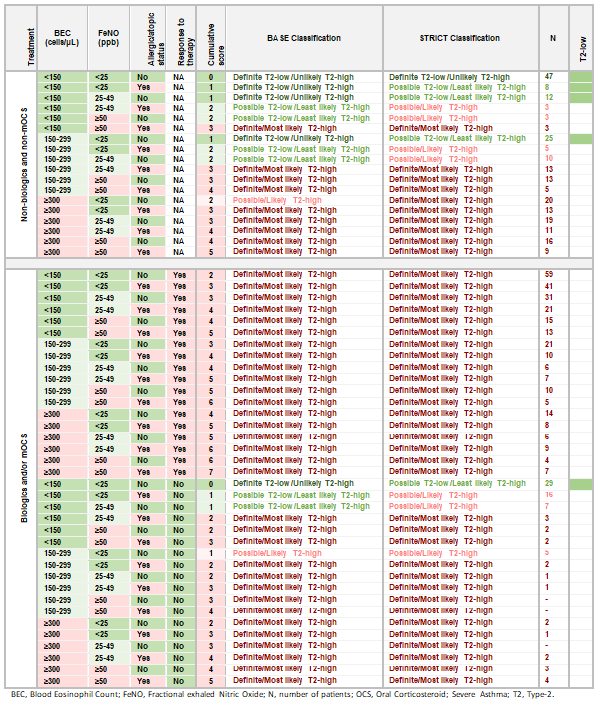
This cross-sectional and retrospective chart review 2-part study included outpatients with SA treated by asthma specialists (pulmonologists and allergists) in routine care settings in Greece. Details of the protocol and study design have been published elsewhere.35 In brief, we devised a new composite SA endotype classification system to categorize patients into T2-low and T2-high based on airway inflammation biomarkers (BEC and FeNO) and allergic/atopic status. For patients currently on biologic and/or mOCS treatment, the scoring system employed lower thresholds for T2-inflammation detection (since such therapy can mask the T2 signature), while response to treatment was also factored in (since T2-low asthma typically does not respond to these therapies). Specifically, scores of 0/1/2 were assigned for BEC <150/150-299/≥300 cells/μL and FeNO <25/25-49/≥50, scores of 0/1 for negative/positive allergic (or atopic) status, and score of 0/2 for negative/positive response to biologic/mOCS therapy. Based on the cumulative score of the four aforementioned criteria, two different definitions, namely BASE and STRICT, were utilized to classify patients into “Definite T2-low,” “Possible T2-low,” “Possible T2-high,” and “Definite T2-high”. Detailed information on the scoring system and SA endotype classification based on the two study definitions is shown in Table S1.
Using the Asthma Control Test (ACTTM), patients with T2-low SA were further stratified into ‘controlled’ (ACT score ≥20) and ‘uncontrolled’ (ACT score <20), based on asthma symptom control level at the study visit.
In part A of the study, top-level patient data were collected from all eligible patients to assess frequency and predictors of T2-low SA. Patients classified as T2-low proceeded to part B of the study, where further characteristics and patient-reported outcomes (PROs) were collected.
Study population
Eligibility criteria have been described elsewhere.35 Briefly, the study enrolled adult patients with SA, physician-diagnosed asthma for ≥12 months, and ≥2BEC/≥1IgE/≥1FeNO available measurements within the previous 12 months before (and including) the study visit (≥1 IgE measurement before omalizumab initiation for omalizumab-treated patients), who provided their consent to participate.
Ethical considerations
The study was designed and conducted in accordance with the ethical principles outlined in the Helsinki Declaration, the Guidelines for Good Pharmacoepidemiology Practice of the International Society for Pharmacoepidemiology, the STROBE (Strengthening the Reporting of Observational Studies in Epidemiology) recommendations where applicable, the EU General Data Protection Regulation, and local rules and regulations.
Study outcomes
The primary outcome was to assess the frequency of BASE-defined T2-low asthma endotype among SA patients. Secondary outcomes presented herein included assessment of i) the frequency of STRICT-defined T2-low asthma endotype, ii) the level of asthma symptom control in the T2-low subpopulation, and iii) the following outcomes at the study visit in the T2-low subpopulation and its subgroups with ACT-defined ‘controlled’ and ‘uncontrolled’ asthma: characterization of the patient demographic/clinical profile; management strategies; clinically significant asthma exacerbations (CSEs) and asthma-related HCRU over the past 12 months; spirometry-based lung function; and PROs of Mini-Asthma Quality of Life Questionnaire (Mini-AQLQ), hospital anxiety and depression scale (HADS), and Work Productivity and Activity Impairment: Respiratory Symptoms (WPAI:RS) questionnaire. Exploratory objectives presented herein include the identification of factors influencing the frequency of T2-low SA and the ACT-defined asthma symptom control in the T2-low SA subpopulation. 35
Statistical analyses
A precision-based sample size calculation was employed, resulting in a planned total sample of 600 patients and an anticipated size of ≥100 patients for the T2-low subpopulation,35 thus ensuring a margin of error ≤10% for study outcomes.35
Continuous and categorical variables are displayed using descriptive statistics. The Clopper-Pearson 95% confidence intervals (CI) were estimated for binomial proportions and the 95% Poisson CI for incidence rates. The association of factors of interest with binary outcomes was evaluated through univariable and multivariable logistic regression models. More details are available in the Supplementary Methods.
Except for partial dates, no missing data imputation was applied. All statistical tests were two-sided with 0.05 significance level. All analyses were performed using SAS v9.4 (SAS Institute, Cary, NC).
RESULTS
Patient disposition
Over a 12-month recruitment period from 22March-2022 (first patient in) to 15 March-2023 (last patient in), 613 patients were consecutively enrolled in 30 study sites. Eleven patients did not meet all eligibility criteria; thus, the analysis included 602 patients, 74.4% of whom were enrolled by hospital clinics, and 61.0% were treated with biologics and/or mOCS at enrolment.
T2-low SA frequency
With respect to T2-inflammation biomarkers that comprised two of the four endotype classification criteria in the composite scoring system, BEC<300cells/μL and FeNO<50ppb was reported in 75.4% (454/602) and 81.1% (488/602) of the patients overall, respectively. Overall, 63.1% (380/602) of patients had a positive allergic/atopic status. Since different thresholds were employed for classifying the SA endotype of patients currently receiving biologics/mOCS, the scores distribution is presented in Figure 1A separately among those treated and not treated with biologics/mOCS. Of those treated with biologics/mOCS, 21.8% (80/367) were non-responders to therapy.
The number of patients corresponding to each unique combination of endotype classification criteria threshold along with respective cumulative score is provided in Table S1. Among patients not treated with biologics/mOCS, 48.1% (113/235) and 39.1% (92/235) had T2-low SA based on the BASE and STRICT definitions, respectively (top panel of Figure 1B and Figure S1). Among those treated with biologics/mOCS, 14.2% (52/367) and 7.9% (29/367) had T2-low SA based on the BASE and STRICT definitions, respectively (bottom panel of Figure 1B and Figure S1).
Discordance between the BASE and STRICT definitions was identified for 7.3% of patients, i.e., n=44 (21 among those not treated and 23 among those treated with biologics/mOCS), who were classified as “T2-low” based on the former and “T2-high” based on the latter definition (Figure 1B; Figure S1). After careful examination of the clinical profile of these intermediate endotype cases, we observed an increased frequency of T2-high features among them, suggesting that they may represent the T2-high rather than the T2-low endotype; specifically, the highly prevalent T2-high features included allergic rhinitis (63.6%), nasal polyposis (38.6%), skin prick test positivity (72.5%), and current treatment with biologics (47.7%). Since these cases were misclassified as T2-low using the BASE definition, the foregoing advocates that the actual T2-low endotype is more reliably detected by the STRICT classification scheme. After excluding the 44 (7.3%) intermediate SA endotype cases, the frequency of T2-low SA was 20.1% (121/602; 95% CI: 16.97-23.53), whereas the rate of T2-high SA was 72.6% (437/602).
Patient disposition in terms of biologics/mOCS treatment, healthcare institution type and location is depicted in Figure 2.
Characteristics and exacerbation burden in the T2-low and T2-high subpopulations
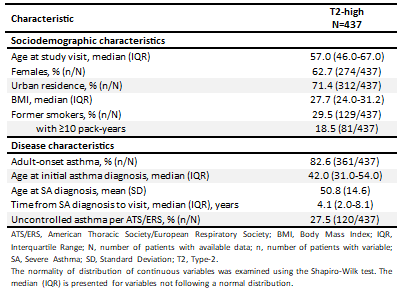
Patient characteristics are presented in Tables 1 and 2 for the T2-low and T2-high subpopulations, respectively. Median (interquartile range; IQR) asthma duration at the study visit was 10.9 (4.5-20.2) and 12.0 (5.4-22.9) years in the T2-low and T2-high subpopulations, respectively. The most recent biomarker (BEC, FeNO, IgE) levels in the two subpopulations are provided in Figure S2. As per study design, further sociodemographic/clinical characteristics, including lung function parameters, were collected for the T2-low subpopulation (study part B) (Table 1).
Over the 12 months before enrolment, 71.1% and 56.5% of the T2-low and T2-high SA subpopulations respectively had experienced ≥1 CSE (Figure 3A), with 32.2% and 28.6% having experienced ≥2 CSEs (Figure 3B). The respective 12-month CSE rate was 1.23 (95% CI: 1.05-1.45) and 0.99 (95% CI: 0.90-1.08) episodes/patient-year.
The association of factors of interest with frequency of T2-low SA endotype was examined using univariable (Figure E3) and multivariable (Figure 4A) regression analyses. Based on multivariable analysis, patients without any CSEs in the previous year and patients residing in urban areas had lower odds of having T2-low SA endotype than those with ≥1 CSE and those residing in semi-urban/rural areas (Odds Ratio: 0.49 and 0.56, respectively; Figure 4A).
Asthma symptom control in the T2-low subpopulation
In the T2-low SA subpopulation, median (IQR) ACT score at the study visit was 18.0 (16.0-21.5), with 37.2% (45/121; 95% CI: 28.58-46.44) of patients having well-controlled (ACT score: 20-25), 39.7% (48/121; 95% CI: 30.89-48.96) not well-controlled (ACT: 16-19), and 23.1% (28/121; 95% CI: 15.96-31.68) very poorly controlled asthma (ACT: 5-15); the latter two comprised the ‘uncontrolled’ subgroup (62.8%).
The characteristics of the subgroups of patients by ACT-defined asthma control level are presented in Table 1 and Figure S2. CSEs over the past 12 months before the study visit in the ‘controlled’ and ‘uncontrolled’ subgroups are shown in Figure 3; CSE rate was 0.64 (95% CI: 0.45-0.93) and 1.58 (95% CI: 1.32-1.89) episodes/patient-year, respectively.
The association of factors of interest with asthma symptom control among T2-low SA patients was examined using univariable (Figure S4) and multivariable (Figure 4B) regression analyses. Multivariable analysis determined the following factors as predictors of uncontrolled asthma (ACT<20): increasing number of CSEs in the previous year, HADS-total (HADS-T) score ≥15, and forced-expiratory volume in 1 second (FEV1) <65% predicted. On the contrary, increasing patient’s age at asthma symptom onset was positively associated with well-controlled asthma (Figure 4B).
Current asthma medication in the T2-low and T2-high subpopulations
Current receipt of any add-on medication (as maintenance and/or reliever) to high-dose ICS/long-acting beta agonist (LABA) was reported for 80.2% (97/121) and 92.0% (402/437) of the T2-low and T2-high SA patients, respectively. Most frequent add-on treatments were long-acting muscarinic antagonists (LAMA), leukotriene receptor antagonists (LTRA) and/or biologic agents (Figure 5A), with anti-IL5(R) agents accounting for most biologics (Figure 5B). Treatment patterns are depicted in Figure 5C. Biologic add-on treatment was given to 22.3% of T2-low patients [median (IQR) exposure: 1.8 (1.0-4.2) years] and was more common among T2-low controlled; as expected, this frequency was much higher among T2-high SA patients [70.5%; median (IQR) exposure: 1.8 (0.9-3.8) years] (Figure 5A, 5C). Only 1/121 T2-low SA patient (0.8%) and 13/437 T2-high patients (3.0%) were OCS-dependent (i.e., treated with OCS equivalent to a daily dose of ≥5mg prednisone for ≥3 months). Allergen immunotherapy was reported for 6.2% of the T2-high SA patients.
Among the T2-low SA patients, median (IQR) duration of ICS/LABA treatment at the current high-dose regimen was 1.8 (0.8-3.6) years, whereas the respective duration regardless of current dosing was 2.9 (1.0-4.8) years. Physician-reported patients’ adherence to both maintenance medication and correct inhaler technique was ‘high’ for 78.5% of the T2-low and 84.0% of the T2-high SA patients.
PROs and HCRU in the T2-low subpopulation
HRQoL of T2-low SA patients was impaired with median total Mini-AQLQ score of 4.9 (Figure 6A), most affected domain being “environmental stimuli” (Figure S5A), and a score <6 reported in 79.5% (93/117) (Figure 6B). Median (IQR) anxiety (HADS-A) and depression (HADS-D) subscale scores were 7.0 (4.0-10.0) and 6.0 (2.0-9.0), respectively. The median HADS-T score was 13.0, with 43.8% (49/112) of patients having clinically significant emotional distress (score≥15) (Figure S5B-C).
All but one (120/121) T2-low SA patients completed the WPAI:RS questionnaire at the study visit and reported a median activity impairment (AI) of 30.0% (Figure E6). Employed patients reported a median (IQR) absenteeism, presenteeism and work productivity loss (WPL) of 0.0 (0.0-4.8)%, 30.0 (0.0-50.0)%, and 30.0 (5.0-51.4)%, respectively (Figure S6A).
HCRU outcomes are presented in Figure S6B. The rate of asthma-related ED visits over the last year was 0.21 (95% CI: 0.14-0.31) for the overall T2-low SA population, and 0.07 (95% CI: 0.02-0.21) and 0.29 (95% CI: 0.19-0.44) for the controlled and uncontrolled subgroups, respectively. The annual asthma-related hospitalization rate was 0.04 (95% CI: 0.02-0.10) for the overall T2-low SA population (all had uncontrolled asthma), with the median total length of hospital stay being 7.0 (range: 5.0-8.0) days.
Relevant information on PROs and HCRU outcomes among controlled and uncontrolled subgroups is provided in Figure 6, Figure S5, and Figure S6, indicating that patients with uncontrolled T2-low SA have worse PROs and more asthma-related healthcare encounters.
DISCUSSION
The PHOLLOW study proposes a novel tool for classification of SA patients in T2-low and T2-high endotypes and provides valuable insights into the frequency, characteristics, treatment landscape and humanistic burden of the T2-low SA endotype in Greece.
Based on a composite measure of airway inflammation biomarkers (BECs and FeNO), which also took into consideration patients’ allergic/atopic status, and response to biologic/mOCS treatment, we found that a fifth of SA patients are classified into the T2-low endotype. This rate resembles the majority of respective rates reported in the literature for SA, despite variations in classification schemes: 34% (Sweden; T2-low based on: BEC<300cells/μL & FeNO<25ppb & IgE<150IU/mL),25 24% (UK; BEC≤150cells/μL & FeNO≤20ppb),24 23% (UK; BEC<150cells/μL & FeNO<15ppb & periostin<45ng/Ml),23 20% (UK; BEC<300cells/μL & FeNO<25ppb),22 18% (Finland; uncontrolled SA; BEC<150cells/μL & FeNO<25ppb),21 18% (Japan; BEC<150cells/μL & IgE<75IU/mL),20 12% [International SA Registry (ISAR); BEC<300cells/μL & FeNO<25ppb & IgE<75kU/L],19 11% (Japan; uncontrolled SA; absence of atopy & BEC≤300cells/μL & FeNO≤25ppb)18 and 9% (UK; BEC<150cells/μL & FeNO<25ppb).17 Our findings expand on the limited available European literature and yield evidence of a multicomponent tool for T2-high and T2-low, endotype-driven, classification, which is a critical step toward personalized care delivery in SA.
One of the identified predictors of T2-low endotype was non-urban residence, which can be speculatively linked to T2-high markers in urban areas due to increased perennial allergen sensitization caused by air pollution.36 Furthermore, patients experiencing ≥1 CSEs in the past year had higher odds of having T2-low SA. Notably, mean number of CSEs over the previous year was 1.7 in the PHOLLOW T2-low SA subpopulation, which is the same as reported previously in the ISAR regardless of endotype.37 In the latter study, use of biologics, which have demonstrated efficacy in reducing exacerbations in eosinophilic asthma,38,39 was low, as in PHOLLOW (<26%). In addition, the CSE rate of 1.23 episodes/year in PHOLLOW T2-low SA patients falls within the range of 1.22-1.65 reported for the subgroups of patients in the placebo arm of tezepelumab trials fulfilling ≥2 T2-low biomarker thresholds (including BEC/FeNO/perennial allergy).34 Hence, the unsurprisingly high rate of biologic use (71%) and controlled asthma (73%) among T2-high patients in PHOLLOW, coupled with the absence of tailored treatments for T2-low SA, possibly explain the positive association of ≥1 CSEs with T2-low endotype.
Symptoms remained uncontrolled (ACT score<20) in a high proportion of T2-low SA patients in PHOLLOW (63%). These results are in line with findings from patients with general SA (any endotype) in two large international real-world studies (65-77%37,40). As in PHOLLOW, less than a third of patients were biologic-treated in these studies, which do not depict the current treatment landscape of eosinophilic asthma. In a more recent study from Swiss SA Registry data, 82% of SA patients were biologic-treated, ACT-defined uncontrolled asthma was reported in only 26%, while their multivariable analysis indicated a positive association between asthma control and biologics.41 Accordingly, in PHOLLOW, physician-assessed uncontrolled asthma was much lower among T2-high SA patients (28% versus 73% in T2-low), 71% of whom were biologic-treated. A growing body of real-world evidence suggests that biologics lead to reduced exacerbation frequency and improved lung function and ACT scores in eosinophilic asthma.38,39 Consistently, frequent exacerbations and worse lung function were associated with uncontrolled SA based on our multivariable analysis, corroborating the findings of previous asthma studies.42 Therefore, future asthma control rates are expected to improve with increasing use of existing biologics among eosinophilic SA but also introduction of newer, much anticipated, treatments for T2-low SA.
Of note, 22.3% of T2-low patients in PHOLLOW were receiving biologics not licensed for T2-low asthma, indicating the unmet therapeutic need in this subgroup and possibly an off-label use of biologics in clinical routine.
The PHOLLOW Mini-AQLQ score results (mean=4.9; score<6=80%) suggest that HRQoL is impaired in T2-low SA patients as in general asthmatics (any severity/any endotype) in other European countries (mean=4.5-5.4;43-45 score<6=58%44), general asthmatics in other Greek cohorts (mean=4.4-4.646,47), as well as severe/difficult-to-treat asthmatics based on data from the US TENOR and Swedish BREATHE cohorts (mean=4.9-5.325,48). Many real-world studies have already established asthma control as a major determinant of disease-specific QoL.43-45,48-52 Consistently, the uncontrolled SA T2-low patients in PHOLLOW had lower mean Mini-AQLQ scores (4.6) than their controlled counterparts (6.1), similar to the literature ranges of 4.3-4.553-56 and 5.8-6.151,53,56 for general SA (any endotype), respectively. Importantly, almost all patients in the uncontrolled and nearly half of those in the controlled T2-low SA subgroups of PHOLLOW, had a score <6. Our results indicate that T2-low SA, especially when uncontrolled, may result in substantial HRQoL impairments.
Our study also demonstrated clinically significant emotional distress associated with uncontrolled asthma in T2-low SA. The rate of HADS-T score ≥15 was more than double in patients with uncontrolled (55%) compared with controlled asthma (24%). Similarly, mean HADS-T score was higher among uncontrolled than controlled patients (15.4 versus 9.2), signifying higher distress than uncontrolled (12.3-13.6) and controlled (7.0) patients of the European U-BIOPRED cohort (any endotype SA), albeit different asthma control definitions.53 In addition, the PHOLLOW T2-low SA population seems especially affected by psychological distress when comparing individual HADS scores with normative data; specifically, mean HADS-D and HADS-A scores of 3.9 and 5.1, respectively, have been reported for the control group of a Greek HADS validation study.57
Median WPL and AI scores in PHOLLOW T2-low SA patients were worse than the previously reported among Greek patients with chronic lung disease (including asthma),58 while mean scores were at least as high as the international NOVELTY cohort (any endotype SA; WPL: 32.4 versus 12.1 and AI: 40.9 versus 17.3, in uncontrolled versus controlled SA, respectively).40 Furthermore, our findings corroborate the relationship between asthma control and WPL that has been documented in the literature.40,42,52,56,59,60 Lastly, the PHOLLOW findings showed that healthcare encounters were non-negligible, with more than half and a fifth of uncontrolled T2-low SA patients performing asthma-related unscheduled private practice and ED visits in the past year, respectively.
PHOLLOW had some limitations, which have been described previously.35 Importantly, the planned sample sizes were met, lending credibility to the precision of study outcomes. Furthermore, rate of missing data did not exceed 10% for key variables. It is noteworthy, however, that in the absence of statistical comparisons between subgroups by asthma control level, caution should be exercised when interpreting relevant observations. Additionally, HCRU outcomes may be underestimated due to recall bias.35
In summary, we describe here for the first time a composite measure of airway inflammation, including patients’ allergic/atopic status, and response to biologic/mOCS treatment, to classify SA patients in T2-low and T2-high endotypes. Based on two different well-defined classification schemes, at least one-fifth of SA patients present with a T2-low endotype in Greece. Despite the long-term duration of high-dose ICS/LABA treatment and high adherence, symptoms remain uncontrolled in six out of ten T2-low SA patients, affecting their QoL and work ability, which, together with an increased HCRU, may contribute to a substantial socioeconomic burden. In conclusion, the burden of T2-low SA is significant, highlighting the unmet need in this patient population who would benefit from upcoming targeted therapeutic approaches.
CONFLICT OF INTEREST
K. Porpodis has received grants or contracts from Boehringer Ingelheim, Menarini, Astra Zeneca, GSK, Elpen and Pfizer; consulting fees from Boehringer Ingelheim, Menarini, Astra Zeneca, GSK, Elpen and Pfizer; payment or honoraria from Boehringer Ingelheim, Menarini, Astra Zeneca, GSK, Elpen and Pfizer; payment for expert testimony from Boehringer Ingelheim, Menarini, Astra Zeneca, GSK, Elpen and Pfizer; and support for attending meetings and/or travel from Boehringer Ingelheim, Menarini, Astra Zeneca, GSK, Elpen and Pfizer. K. Kostikas has received grants or contracts from Astra Zeneca, Boehringer Ingelheim, Chiesi, Innovis, Elpen, GSK, Menarini, Novartis and NuvoAir; has received consulting fees from Astra Zeneca, Boehringer Ingelheim, Chiesi, Csl Behring, Elpen, GSK, Menarini, Novartis, Pfizer and Sanofi Genzyme; has received payment or honoraria from Alector Pharmaceuticals, Astra Zeneca, Boehringer Ingelheim, Chiesi, Elpen, Gilead, GSK, Menarini, MSD, Novartis, Sanofi Genzyme, Pfizer and WebMD; has participated in Data Safety Monitoring Board or Advisory Board for Chiesi; and is a member of GOLD Assembly. A. Tzouvelekis has received grants or honoraria from Boehringer Ingelheim, Hoffman La Roche, Menarini, Astra Zeneca, GSK, Elpen, Pfizer and Bayer (financial support for department); is holder of therapeutic patents «Inhaled or aerosolized delivery of thyroid hormone to the lung as a novel therapeutic agent in fibrotic lung diseases” OCR#6368” and «Administering Thyroid receptor b-agonist hormone for preventing or treating a fibrotic lung disease” OCR#20230372275” both disclosed to Yale University (both outside the submitted work); has received consulting fees from Boehringer Ingelheim, Hoffman La Roche, Menarini, Astra Zeneca, GSK, Elpen, Pfizer, Pliant, Puretech, Guidotti and Genentech (outside the submitted work); has received payment or honoraria from Boehringer Ingelheim, Hoffman La Roche, Menarini, Astra Zeneca, GSK, Elpen, Pfizer, Bayer, Sobi and Gilead (outside the submitted work); has received payment for expert testimony for Boehringer Ingelheim, Hoffman La Roche, Elpen, Pliant and Puretech (outside the submitted work); and has received support for attending meetings and/or travel from Boehringer Ingelheim, Hoffman La Roche, Menarini, Astra Zeneca, GSK , Elpen and Pfizer. M. Makris has received grants or contracts from GSK, Chiesi, Sanofi Aventis, Astra Zeneca, Elpen, Pfizer and Abbvie; consulting fees from GSK, Chiesi, Sanofi Aventis, Astra Zeneca, Elpen and Pfizer (personal); payment or honoraria from GSK, Chiesi, Sanofi Aventis, Astra Zeneca, Elpen, Pfizer, Abbvie and Takeda (personal); and support to attend meetings and/or travel from Chiesi (personal and staff members), Menarini (staff members) and Takeda (personal). G. Konstantinou has received payment or honoraria from Astra Zeneca, Chiesi, Menarini, Sanofi, Novartis and Vianex. E. Zervas has received advisory board fees from Astra Zeneca, Chiesi, Elpen, GSK, Menarini, MSD and Novartis; has received honoraria and fees for lectures from Astra Zeneca, Boehringer Ingelheim, Bristol Myers, Chiesi, Elpen, GSK, Menarini, MSD and Novartis; has received travel accommodations and meeting expenses from Astra Zeneca, Chiesi, GSK and Roche; and, is treasurer of Hellenic Thoracic Society. S. Loukides has received a grant from Astra Zeneca (support for department); has received payment or honoraria from Astra Zeneca, GSK, Menarini, Chiesi and Elpen and has participated in an advisory board for Astra Zeneca, GSK, Chiesi and Menarini. P. Steiropoulos has received consulting fees from Astra Zeneca, Boehringer Ingelheim, Chiesi, Elpen, GSK, Guidotti and Menarini; payment or honoraria from Astra Zeneca, Boehringer Ingelheim, Chiesi, Elpen, GSK, Guidotti, Menarini and Pfizer; and support for attending meetings and/or travel from Astra Zeneca, Boehringer Ingelheim, Chiesi, Elpen, GSK, Guidotti, Menarini and Pfizer. K. Katsoulis has received payment or honoraria from GSK and support for attending meetings and/or travel from Menarini Hellas. E. Syrigou has received payment or honoraria from Astra Zeneca and Menarini. M. Gangadi has received support to attend meetings and/or travel from Astra Zeneca and Chiesi. A. Christopoulos has received honoraria for lectures and educational events from GSK, Astra Zeneca, Menarini and Chiesi, and support for attending scientific meetings from GSK and Menarini. D. Papapetrou has received consulting fees from Astra Zeneca, Menarini, Roche and GSK; payment or honoraria from Astra Zeneca and Menarini and support for attending meetings and/or travel from Menarini, Elpen, Chiesi, Guidotti, Astra Zeneca, Novartis, Lilly, Boehringer Ingelheim, Faran and Bayer. E. Tzortzaki has received grants or contracts from Astra Zeneca, Chiesi, Gsk, Elpen and Menarini (private practice); payment or honoraria from Astra Zeneca, Chiesi, GSK, Elpen and Menarini (private practice); and support for attending meetings and/or travel from Astra Zeneca and GSK. I. Papanikolaou has received grants or contracts from Boehringer Ingelheim, Elpen, GSK, Astra Zeneca and Menarini (for institution); payment or honoraria from Boehringer Ingelheim, GSK and Astra Zeneca; and support for attending meetings and/or travel from Chiesi, Boehringer Ingelheim and Astra Zeneca. G. Kromidas has received support from Astra Zeneca (personal). D. Latsios has received consulting fees from Chiesi, GSK, Menarini; payment or honoraria from Chiesi, Elpen, GSK, Menarini and Astra Zeneca, and support for attending meetings and/or travel from Menarini and Boehringer Ingelheim. N. Tzanakis has received consulting fees from Astra Zeneca, Chiesi, GSK, Guidotti, Menarini, Boehringer Ingelheim, Special Therapeutics, Pfizer and Gilead; payment or honoraria from Astra Zeneca, Chiesi, GSK, Guidotti, Menarini, Boehringer Ingelheim, Special Therapeutics and Pfizer; and support for attending meetings and/or travel from Astra Zeneca, Chiesi, GSK, Guidotti, Menarini, Boehringer Ingelheim, Special Therapeutics and Pfizer. M. Markatos has received consulting fees from Astra Zeneca, Chiesi, Gsk, Guidotti and Menarini; payment or honoraria from Astra Zeneca, Chiesi, Elpen, GSK Guidotti and Menarini and support for attending meetings and/or travel from Astra Zeneca, Chiesi, Elpen, GSK, Guidotti and Menarini. A. Damianaki has received a FENO counter from Astra Zeneca; grants or contracts from Chiesi; support to attend meetings and/or travel from Chiesi, Guidotti, Astra Zeneca, Elpen, Menarini and Viatris; and, sleep recorders for sleep lab from Menarini. A. Chatzipetrou has received payment or honoraria from GSK, Pfizer, Sanofi Aventis and Astra Zeneca and support for attending meetings and/or travel from Sanofi, Vianex and Pfizer. C. Papista, M. Bartsakoulia, N. Mathioudakis, and P. Galanakis are employees of AstraZeneca Greece. P. Bakakos has received consulting fees from GSK, Menarini, Elpen, Astra Zeneca, Pfizer, Vianex and MSD and payment or honoraria from Astra Zeneca, Chiesi, Elpen, Menarini, Gilead, GSK and Pfizer. The rest of the authors declare that they have no relevant conflicts of interest.
AUTHOR CONTRIBUTIONS
NM, PG and PB conceived and designed the study. KP, NZ, KK, AT, MM, GNK, AZ, SL, PS, KK, AP, AS, MG, AC, DP, FP, KG, ET, SKV, IP, IP, GK, DL, NT, MM, AD, AM, AC, DV, IT and PB have contributed in acquisition of data. KP, NZ, KK, AT, MM, GNK, AZ, SL, PS, KK, AP, AS, MG, IT, CP, MB and PB have contributed in analysis and interpretation of data. KP, NZ, KK, AT, MM, GNK, AZ, SL, PS, KK, AP, AS, MG, IT, CP and PB have been involved in drafting the manuscript or revising it critically for important intellectual content. All authors read, revised and approved the final manuscript.
REFERENCES
- Global burden of chronic respiratory diseases and risk factors, 1990-2019: an update from the Global Burden of Disease Study 2019. EClinicalMedicine. 2023;59:101936.
- Kourlaba G, Bakakos P, Loukides S, Vellopoulou K, Solakidi A, Maniadakis N. The self-reported prevalence and disease burden of asthma in Greece. J Asthma. 2019;56(5):478-97.
- Chung KF, Wenzel SE, Brozek JL, Bush A, Castro M, Sterk PJ, et al. International ERS/ATS guidelines on definition, evaluation and treatment of severe asthma. Eur Respir J. 2014;43(2):343-73.
- Hekking PW, Wener RR, Amelink M, Zwinderman AH, Bouvy ML, Bel EH. The prevalence of severe refractory asthma. J Allergy Clin Immunol. 2015;135(4):896-902.
- von Bülow A, Kriegbaum M, Backer V, Porsbjerg C. The prevalence of severe asthma and low asthma control among Danish adults. J Allergy Clin Immunol Pract. 2014;2(6):759-67.
- Backman H, Jansson SA, Stridsman C, Eriksson B, Hedman L, Eklund BM, et al. Severe asthma-A population study perspective. Clin Exp Allergy. 2019;49(6):819-28.
- Rönnebjerg L, Axelsson M, Kankaanranta H, Backman H, Rådinger M, Lundbäck B, et al. Severe Asthma in a General Population Study: Prevalence and Clinical Characteristics. J Asthma Allergy. 2021;14:1105-15.
- Busse WW, Kraft M. Current unmet needs and potential solutions to uncontrolled asthma. Eur Respir Rev. 2022;31(163).
- Lang DM. Severe asthma: epidemiology, burden of illness, and heterogeneity. Allergy Asthma Proc. 2015;36(6):418-24.
- Kuruvilla ME, Lee FE, Lee GB. Understanding Asthma Phenotypes, Endotypes, and Mechanisms of Disease. Clin Rev Allergy Immunol. 2019;56(2):219-33.
- Kyriakopoulos C, Gogali A, Bartziokas K, Kostikas K. Identification and treatment of T2-low asthma in the era of biologics. ERJ Open Res. 2021;7(2).
- Ricciardolo FLM, Sprio AE, Baroso A, Gallo F, Riccardi E, Bertolini F, et al. Characterization of T2-Low and T2-High Asthma Phenotypes in Real-Life. Biomedicines. 2021;9(11).
- Carr TF. Treatment approaches for the patient with T2 low asthma. Ann Allergy Asthma Immunol. 2021;127(5):530-5.
- Peters MC, Ringel L, Dyjack N, Herrin R, Woodruff PG, Rios C, et al. A Transcriptomic Method to Determine Airway Immune Dysfunction in T2-High and T2-Low Asthma. Am J Respir Crit Care Med. 2019;199(4):465-77.
- Hinks TSC, Levine SJ, Brusselle GG. Treatment options in type-2 low asthma. Eur Respir J. 2021;57(1).
- Schleich F, Brusselle G, Louis R, Vandenplas O, Michils A, Pilette C, et al. Heterogeneity of phenotypes in severe asthmatics. The Belgian Severe Asthma Registry (BSAR). Respir Med. 2014;108(12):1723-32.
- Jackson DJ, Busby J, Pfeffer PE, Menzies-Gow A, Brown T, Gore R, et al. Characterisation of patients with severe asthma in the UK Severe Asthma Registry in the biologic era. Thorax. 2021;76(3):220-7.
- Oishi K, Hirano T, Matsuda K, Hamada K, Uehara S, Suetake R, et al. The prevalence and clinical characteristics of T2-high and T2-low endotype of severe uncontrolled asthma distinguished by combining popular type-2 biomarkers. Eur Respir J. 2019;54(suppl 63):PA2749.
- Denton E, Price DB, Tran TN, Canonica GW, Menzies-Gow A, FitzGerald JM, et al. Cluster Analysis of Inflammatory Biomarker Expression in the International Severe Asthma Registry. J Allergy Clin Immunol Pract. 2021;9(7):2680-8.e7.
- Harada N, Makita N, Fukui K, Nishida K, Oneda K, Tashiro N. A Retrospective Claims Database Study to Clarify Disease Burden of Severe Asthma Patients with Type 2 High or Low Inflammation. J Asthma Allergy. 2023;16:83-93.
- Viinanen A, Aakko J, Lassenius MI, Telg G, Nieminen K, Kaijala S, et al. Type 2 Low Biomarker Stability and Exacerbations in Severe Uncontrolled Asthma. Biomolecules. 2023;13(7).
- Jackson DJ, Aljamil N, Roxas C, Fernandes M, Green L, Osman L, et al. Severe ‘T2 Low’ Asthma Is Uncommon and Frequently Associated with Co-Morbidities Known to Cause Respiratory Symptoms. American Thoracic Society 2018 International Conference. A33. ASTHMA MECHANISMS. A1341-A1341.
- Heaney LG, Busby J, Hanratty CE, Djukanovic R, Woodcock A, Walker SM, et al. Composite type-2 biomarker strategy versus a symptom-risk-based algorithm to adjust corticosteroid dose in patients with severe asthma: a multicentre, single-blind, parallel group, randomised controlled trial. Lancet Respir Med. 2021;9(1):57-68.
- McDowell PJ, Busby J, Hanratty CE, Djukanovic R, Woodcock A, Walker S, et al. Exacerbation Profile and Risk Factors in a Type-2-Low Enriched Severe Asthma Cohort: A Clinical Trial to Assess Asthma Exacerbation Phenotypes. Am J Respir Crit Care Med. 2022;206(5):545-53.
- Frøssing L, Klein DK, Hvidtfeldt M, Obling N, Telg G, Erjefält JS, et al. Distribution of type 2 biomarkers and association with severity, clinical characteristics and comorbidities in the BREATHE real-life asthma population. ERJ Open Res. 2023;9(2).
- Rogliani P, Calzetta L, Matera MG, Laitano R, Ritondo BL, Hanania NA, et al. Severe Asthma and Biological Therapy: When, Which, and for Whom. Pulm Ther. 2020;6(1):47-66.
- Albers FC, Licskai C, Chanez P, Bratton DJ, Bradford ES, Yancey SW, et al. Baseline blood eosinophil count as a predictor of treatment response to the licensed dose of mepolizumab in severe eosinophilic asthma. Respir Med. 2019;159:105806.
- Castro M, Corren J, Pavord ID, Maspero J, Wenzel S, Rabe KF, et al. Dupilumab Efficacy and Safety in Moderate-to-Severe Uncontrolled Asthma. N Engl J Med. 2018;378(26):2486-96.
- FitzGerald JM, Bleecker ER, Menzies-Gow A, Zangrilli JG, Hirsch I, Metcalfe P, et al. Predictors of enhanced response with benralizumab for patients with severe asthma: pooled analysis of the SIROCCO and CALIMA studies. Lancet Respir Med. 2018;6(1):51-64.
- Hanania NA, Wenzel S, Rosén K, Hsieh HJ, Mosesova S, Choy DF, et al. Exploring the effects of omalizumab in allergic asthma: an analysis of biomarkers in the EXTRA study. Am J Respir Crit Care Med. 2013;187(8):804-11.
- Holguin F, Cardet JC, Chung KF, Diver S, Ferreira DS, Fitzpatrick A, et al. Management of severe asthma: a European Respiratory Society/American Thoracic Society guideline. Eur Respir J. 2020;55(1).
- Porsbjerg CM, Sverrild A, Lloyd CM, Menzies-Gow AN, Bel EH. Anti-alarmins in asthma: targeting the airway epithelium with next-generation biologics. Eur Respir J. 2020;56(5).
- Tezspire approved for self-administration in the EU in a new pre-filled pen [Press Release, 13 January 2023]. Available at: https://www.astrazeneca.com/media-centre/press-releases/2023/tezspire-approved-for-self-administration-in-the-eu-in-a-new-pre-filled-pen.html. [Last Accessed: 11 December 2023].
- Corren J, Menzies-Gow A, Chupp G, Israel E, Korn S, Cook B, et al. Efficacy of Tezepelumab in Severe, Uncontrolled Asthma: Pooled Analysis of the PATHWAY and NAVIGATOR Clinical Trials. Am J Respir Crit Care Med. 2023;208(1):13-24.
- Bakakos P, Fouka E, Galanakis P, Katsoulis K, Kostikas K, Loukides S, et al. Protocol, rationale and design of the PHOLLOW cross-sectional and retrospective chart review study to assess the prevalence and characterize the patient profile, clinical features and disease burden of type-2 low severe asthma in routine care settings in Greece. Pneumon. 2022;35(4):1-13.
- Guarnieri M, Balmes JR. Outdoor air pollution and asthma. Lancet. 2014;383(9928):1581-92.
- Wang E, Wechsler ME, Tran TN, Heaney LG, Jones RC, Menzies-Gow AN, et al. Characterization of Severe Asthma Worldwide: Data From the International Severe Asthma Registry. Chest. 2020;157(4):790-804.
- Charles D, Shanley J, Temple SN, Rattu A, Khaleva E, Roberts G. Real-world efficacy of treatment with benralizumab, dupilumab, mepolizumab and reslizumab for severe asthma: A systematic review and meta-analysis. Clin Exp Allergy. 2022;52(5):616-27.
- Bousquet J, Humbert M, Gibson PG, Kostikas K, Jaumont X, Pfister P, et al. Real-World Effectiveness of Omalizumab in Severe Allergic Asthma: A Meta-Analysis of Observational Studies. J Allergy Clin Immunol Pract. 2021;9(7):2702-14.
- Ding B, Chen S, Srivastava D, Quinton A, Cook W, Papi A, et al. Symptom Burden, Health Status, and Productivity in Patients with Uncontrolled and Controlled Severe Asthma in NOVELTY. J Asthma Allergy. 2023;16:611-24.
- Jaun F, Tröster LM, Giezendanne S, Bridevaux PO, Charbonnier F, Clarenbach C, et al. Characteristics of Severe Asthma Patients and Predictors of Asthma Control in the Swiss Severe Asthma Registry. Respiration. 2023;102(10):863-78.
- van Dijk BCP, Svedsater H, Heddini A, Nelsen L, Balradj JS, Alleman C. Relationship between the Asthma Control Test (ACT) and other outcomes: a targeted literature review. BMC Pulm Med. 2020;20(1):79.
- Apfelbacher CJ, Jones C, Hankins M, Smith H. Validity of two common asthma-specific quality of life questionnaires: Juniper mini asthma quality of life questionnaire and Sydney asthma quality of life questionnaire. Health Qual Life Outcomes. 2012;10:97.
- Sundh J, Wireklint P, Hasselgren M, Montgomery S, Ställberg B, Lisspers K, et al. Health-related quality of life in asthma patients – A comparison of two cohorts from 2005 and 2015. Respir Med. 2017;132:154-60.
- Louis G, Pétré B, Schleich F, Zahraei HN, Donneau AF, Silvestre A, et al. Predictors of asthma-related quality of life in a large cohort of asthmatics: A cross-sectional study in a secondary care center. Clin Transl Allergy. 2021;11(7):e12054.
- Exarchos KP, Rovina N, Krommidas G, Latsios D, Gogali A, Kostikas K. Adherence and quality of life assessment in patients with asthma treatment with budesonide/formoterol via the Elpenhaler device: the COMPLETE study. BMC Pulm Med. 2022;22(1):254.
- Bakakos P, Papakosta D, Loukides S. Budesonide/formoterol via the Elpenhaler® device in asthmatic patients: A real-world effectiveness study (The BOREAS Study). Pneumon. 2021;34(4):1-10.
- Chen H, Gould MK, Blanc PD, Miller DP, Kamath TV, Lee JH, et al. Asthma control, severity, and quality of life: quantifying the effect of uncontrolled disease. J Allergy Clin Immunol. 2007;120(2):396-402.
- Gonzalez-Barcala FJ, de la Fuente-Cid R, Tafalla M, Nuevo J, Caamaño-Isorna F. Factors associated with health-related quality of life in adults with asthma. A cross-sectional study. Multidiscip Respir Med. 2012;7(1):32.
- Böhmer MM, Brandl M, Brandstetter S, Finger T, Fischer W, Pfeifer M, et al. Factors associated with generic health-related quality of life in adult asthma patients in Germany: Cross-sectional study. J Asthma. 2017;54(3):325-34.
- Braido F, Brusselle G, Guastalla D, Ingrassia E, Nicolini G, Price D, et al. Determinants and impact of suboptimal asthma control in Europe: The INTERNATIONAL CROSS-SECTIONAL AND LONGITUDINAL ASSESSMENT ON ASTHMA CONTROL (LIAISON) study. Resp Res. 2016;17(1):51.
- Lee LK, Ramakrishnan K, Safioti G, Ariely R, Schatz M. Asthma control is associated with economic outcomes, work productivity and health-related quality of life in patients with asthma. BMJ Open Respir Res. 2020;7(1).
- Shaw DE, Sousa AR, Fowler SJ, Fleming LJ, Roberts G, Corfield J, et al. Clinical and inflammatory characteristics of the European U-BIOPRED adult severe asthma cohort. Eur Res J. 2015;46(5):1308-21.
- Torrego A, Herth FJ, Munoz-Fernandez AM, Puente L, Facciolongo N, Bicknell S, et al. Bronchial Thermoplasty Global Registry (BTGR): 2-year results. BMJ Open. 2021;11(12):e053854.
- Bakakos P, Chatziapostolou P, Katerelos P, Efstathopoulos P, Korkontzelou A, Katsaounou P. Extrafine Beclometasone Dipropionate/Formoterol NEXThaler on Device Usability, Adherence, Asthma Control and Quality of Life. A Panhellenic Prospective, Non-Interventional Observational Study in Patients with Asthma-The NEXT-Step Study. J Pers Med. 2022;12(2).
- Müllerová H, Cockle SM, Gunsoy NB, Nelsen LM, Albers FC. Clinical characteristics and burden of illness among adolescent and adult patients with severe asthma by asthma control: the IDEAL study. J Asthma. 2021;58(4):459-70.
- Michopoulos I, Douzenis A, Kalkavoura C, Christodoulou C, Michalopoulou P, Kalemi G, et al. Hospital Anxiety and Depression Scale (HADS): validation in a Greek general hospital sample. Ann Gen Psychiatry. 2008;7:4.
- Brakema EA, Tabyshova A, van der Kleij R, Sooronbaev T, Lionis C, Anastasaki M, et al. The socioeconomic burden of chronic lung disease in low-resource settings across the globe – an observational FRESH AIR study. Respir Res. 2019;20(1):291.
- Pavord ID, Mathieson N, Scowcroft A, Pedersini R, Isherwood G, Price D. The impact of poor asthma control among asthma patients treated with inhaled corticosteroids plus long-acting β(2)-agonists in the United Kingdom: a cross-sectional analysis. NPJ Prim Care Respir Med. 2017;27(1):17.
- Lee LK, Obi E, Paknis B, Kavati A, Chipps B. Asthma control and disease burden in patients with asthma and allergic comorbidities. J Asthma. 2018;55(2):208-19.
SUPPORTING INFORMATION
Additional supporting information may be found online in the Supporting Information section.
TABLES
TABLE 1 Sociodemographic and clinical characteristics in the overall T2-low SA population and its subpopulations by ACT-based asthma control level.
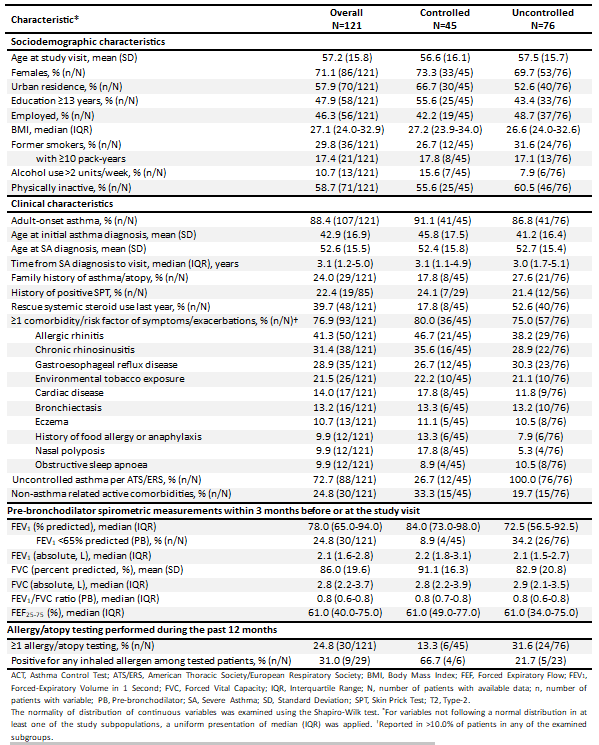
TABLE 2 Sociodemographic and disease characteristics in the T2-high SA population.
SUPPORTING INFORMATION
Methods: Statistical Analyses
Logistic regression models were derived from a stepwise procedure based on the minimization of Akaike information criterion (AIC).
For the association of factors of interest with T2-low SA phenotype through multivariable logistic regression analysis, the modelled probability was T2-low SA phenotype: ‘Yes’ vs ‘No’. The following variables were entered in the initial step of the stepwise procedure: Patient’s age at study visit (≤65 vs >65), Patient’s age at asthma symptom onset (≤18 vs >18), Patient’s age at SA diagnosis (continuous), BMI (kg/m2) (<30 vs ≥30), Number of CSEs in the previous 12 months (0 vs ≥1), Place of residence, Sex, Smoking status (Former smokers with ≥10 pack-years vs Other).
For the association of factors of interest with ACT score in the T2-low SA population through multivariable logistic regression analysis, the modelled probability was ‘ACT≥20 Controlled’ versus ‘ACT<20 Uncontrolled’. The following variables were entered in the initial step of the stepwise procedure: Patient’s age at study visit (continuous), Patient’s age at asthma symptoms (continuous), BMI (kg/m2) (continuous), Number of CSEs in the previous 12 months (continuous), Place of residence, Sex, Nasal polyposis, Allergic rhinitis, Adherence to asthma treatment and correct inhaler technique, Current receipt of biologic treatment, HADS total score (≥15 vs <15), FEV1, BEC (cells/μL) (continuous), IgE (IU/mL) (<150 vs other). Type of institution and administrative region were identified as confounders based on multivariable analyses (data not shown), thus were excluded from the stepwise process, and forced in the final model.
Table